
ENGLISH
READING AND PHONICS
Intent
At Shamblehurst Primary School, we believe that reading is the key to unlocking lifelong learning, curiosity and success. We are committed to ensuring that every child becomes a confident, fluent reader who develops a genuine love of books and literature.
Our reading and phonics provision is carefully designed to ensure that all children, regardless of their starting points, develop the knowledge and skills they need to become successful readers. We recognise that secure phonics knowledge provides the essential foundations for reading and writing and, alongside rich language experiences and exposure to high-quality texts, enables children to access the full curriculum.
We aim to:
Develop fluent, confident and enthusiastic readers.
Ensure children acquire strong phonics knowledge and decoding skills.
Foster a love of reading through high-quality texts, storytelling and reading for pleasure.
Build children's vocabulary, language comprehension and communication skills.
Ensure that every child achieves their full potential through timely intervention and support.
Create lifelong readers who read widely, independently and for enjoyment.
Implementation
Early Reading and Phonics
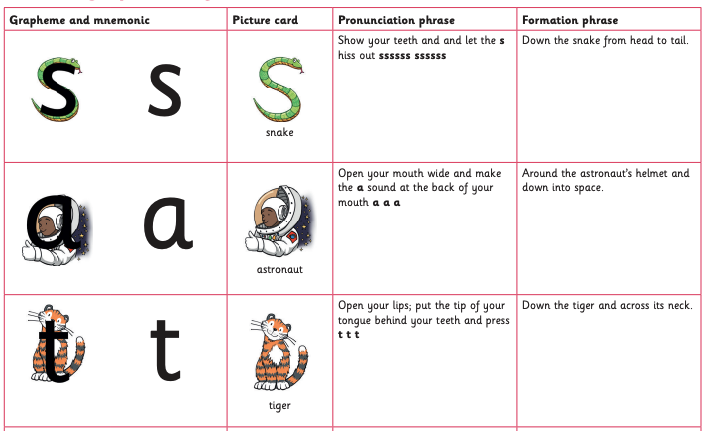
At Shamblehurst, we teach phonics through the Little Wandle Letters and Sounds Revised programme. This systematic, synthetic phonics programme provides a clear progression of learning and ensures consistency in teaching across the school.
WRITING
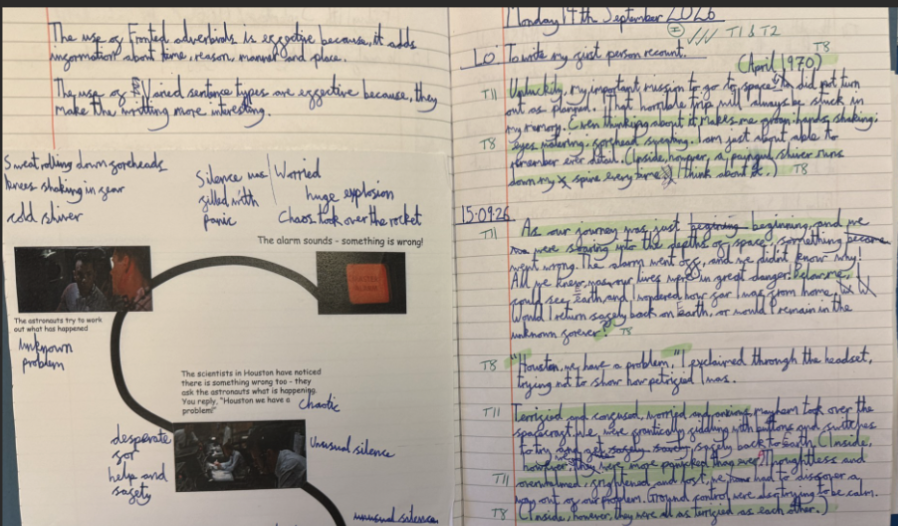
At Shamblehurst, our carefully sequenced approach to writing supports children from their earliest mark-making experiences in EYFS through to becoming confident, independent writers. Through high-quality texts, rich vocabulary, explicit phonics teaching and purposeful writing opportunities, children develop the technical skills, creativity and confidence needed to communicate their ideas effectively and become successful writers.
SPELLING
At Shamblehurst, we believe that spelling is a fundamental component of literacy. Accurate spelling supports children in communicating effectively, improves writing fluency, and contributes to successful reading and vocabulary development.
Our spelling curriculum is built upon the understanding that English spelling is influenced by three interconnected principles:
Phonology – the relationship between sounds and letters
Morphology – the meaningful parts of words and how words are constructed
Etymology – the origins and history of words
Aims
Our spelling curriculum is designed to achieve the following aims:
Develop accurate and confident spellers.
Build children's understanding of how words are structured.
Develop morphological awareness through the study of bases, prefixes and suffixes.
Promote vocabulary growth and support reading comprehension.
Enable children to recognise patterns across related words.
Encourage curiosity about language, including the meanings and origins of words.
Support the application of spelling knowledge within independent writing.
Foster increasingly independent strategies for spelling unfamiliar words
HANDWRITING
At Shamblehurst Primary School, we recognise that handwriting is a key component of writing. In line with the DfE Writing Framework, we teach handwriting explicitly so that transcription becomes increasingly automatic, allowing children to focus on composition, vocabulary and the communication of ideas.
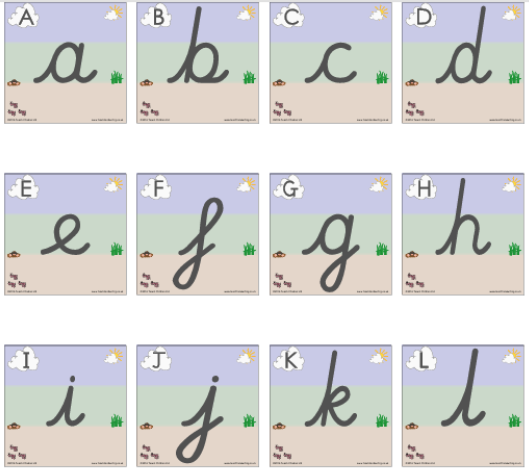
Our handwriting curriculum begins in Reception through Little Wandle Letter Formation, where children develop the gross motor, fine motor and letter formation skills needed for writing. In Years 1 and 2, children follow Teach Handwriting, building fluency through a continuous cursive approach and developing joined handwriting by the end of Key Stage 1.
ORACY
At Shamblehurst, oracy is woven through every aspect of school life. We believe that the ability to speak confidently, listen attentively and communicate effectively is fundamental to success in learning and in later life. Through carefully planned opportunities for discussion, questioning, presentation, debate and collaborative learning, children develop the knowledge, vocabulary and confidence needed to express their ideas clearly and engage thoughtfully with others.
Oracy permeates all areas of our curriculum and is not taught in isolation. Across every subject, children are encouraged to talk as historians, scientists, geographers, mathematicians, artists and readers, using subject-specific vocabulary and disciplinary language to deepen their understanding. High-quality classroom dialogue enables pupils to explain their thinking, justify opinions, build on the ideas of others and ask meaningful questions. In doing so, children develop not only their communication skills but also their critical thinking, reasoning and problem-solving abilities.
From the early years onwards, our classrooms provide rich language environments where purposeful talk is valued and celebrated. Whether sharing ideas with a partner, participating in group discussions, presenting to an audience, performing in productions, engaging in pupil leadership opportunities or reflecting on their learning, children are given regular opportunities to develop their spoken language skills in authentic and meaningful contexts.
By embedding oracy throughout teaching, learning and wider school experiences, we equip our pupils with the confidence, vocabulary and communication skills they need to thrive academically, socially and emotionally, preparing them for the next stage of their education and beyond.